Robot Pixel Shooter Puzzle: Robot-powered grid shooting with pixel art
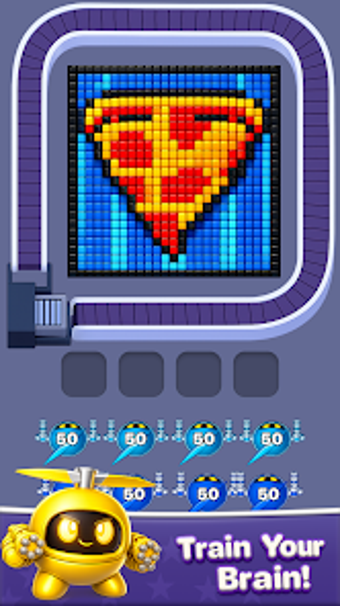
Robot Pixel Shooter Puzzle, developed by WODH, puts players in charge of factory robots tasked with clearing colorful pixel grids through targeted shots. The game uses a simple tap activation that sends robots to a conveyor belt to fire at blocks, combining timing and planning to dismantle puzzles. It presents hundreds of levels, retro pixel visuals, and brain-training challenges aimed at casual players and puzzle fans seeking short tactical sessions.
The shooting mechanics drive the grid puzzle loop
In this game, players tap robots to dispatch them to a conveyor where they automatically shoot at colored blocks, creating a cycle of action and board evaluation. The core design asks for planned shot sequences rather than fast reflexes, so clearing depends on ordering and timing. One-tap activation reduces input complexity while preserving depth in how shots interact with surrounding tiles.
Progression relies on escalating single-player stages and level design
Inside the puzzles, advancement runs through successive stages that increase in complexity by changing block layouts and timing demands. Later levels layer placement constraints and tighter openings, which reward pattern recognition and iterative solving. The structure encourages short runs with clear goals, inviting players to retry specific stages until they optimise shot order and clear difficult configurations.
Visual and audio feedback keeps the board state legible
Within each level, retro-style pixel art and a factory motif give immediate feedback when robots fire and pieces break, with visual effects that highlight cleared groups and conveyor motion. The interface limits on-screen clutter and keeps input to a single touch, which helps players scan the board quickly. Sound cues underline hits and successful chains, supporting quick comprehension of evolving states.
Challenge and replayability reward pattern mastery rather than grind
For progression, difficulty scales through puzzle design, emphasising correct sequencing and timing over resource accumulation. Many stages invite multiple approaches, which supports replay value as players refine strategies for stubborn boards. This model fits players who enjoy optimisation and repeated problem-solving; however, the experience remains focused on solo puzzles without social or competitive modes.
Who benefits most from this puzzle
The game suits players who prefer compact tactical puzzles and methodical pattern work, fitting short solo sessions and iterative problem-solving. It sits inside the developer's pixel-driven puzzle series, suggesting a consistent approach across titles. Limited public reviews point to a modest community footprint, so expect a concentrated single-player experience rather than broad social or multiplayer engagement.